Wedding budget breakdown: Who pays for what?

Planning a wedding comes with a lot of big decisions, and one of the most delicate is figuring out who is paying, and for what. While there are long-standing traditions around wedding expenses, modern etiquette has shifted, leaving many couples and families navigating expectations that aren’t always aligned.
When it comes to who pays for what in a wedding, costs can add up quickly—from the venue and catering to flowers, photography, and wedding invitations—especially once you factor in engagement parties, rehearsal dinners, and other related wedding events. There’s no single “right” way to divide wedding costs, but having a general framework can be helpful, particularly when parents or other family members plan to contribute.
Will you and your fiancé pay for everything yourselves? Will your parents or future in-laws help cover certain expenses? Will costs be split evenly, or handled à la carte? While it may not be the most romantic part of wedding planning, talking about money early and honestly is essential.
Below, we break down who pays for what in a traditional wedding, followed by modern approaches to wedding budgets, plus answers to common questions couples ask as they navigate wedding costs.
Traditional wedding budget breakdown
If you want to stick with tradition—or at least understand where expectations may come from—it helps to know how wedding expenses have historically been divided. In a traditional wedding budget breakdown, the bride’s family typically covers the majority of costs, while the groom’s family and the couple themselves handle a smaller set of responsibilities.
These customs date back to times when weddings were hosted by the bride’s family as a way of welcoming the groom into their household. While that context may feel outdated today, the structure still influences how many families approach wedding planning.
Here’s a closer look at who pays for what in a traditional wedding.
What a bride’s family pays for

Traditionally, the bride’s family assumes responsibility for most of the wedding costs, including the main event itself. This often includes both planning and execution expenses. Common wedding expenses covered by the bride’s family include:
- Wedding invitations and stationery suite: This includes save the dates, formal invitations, RSVP cards, envelopes, and postage. Today, many couples opt for digital invitations to simplify planning and reduce costs—a modern twist that still honors tradition.
- Engagement party and bridal shower: While these events may sometimes be hosted by friends or other family members, they’re often paid for or co-hosted by the bride’s family.
- Wedding planner or coordinator: If the couple hires a full-service wedding planner or day-of coordinator, this cost traditionally falls to the bride’s family.
- Wedding dress and bridal attire: This includes the wedding gown, veil, shoes, jewelry, and other accessories, as well as outfits worn for pre-wedding events.
- Ceremony and reception venues: Venue rental fees for both the ceremony and the wedding reception are typically included here.
- Food and drinks, including the wedding cake: When it comes to who pays for the reception dinner, catering costs—including hors d’oeuvres, dinner, bar service, and dessert—are among the largest wedding expenses and traditionally covered by the bride’s family.
- Flowers and décor: From ceremony arrangements to reception centerpieces and floral installations, plus furniture and other decorative rentals.
- Photography and videography: Services hired to capture the day through professional photography and video.
What a groom’s family pays for

In a traditional setup, the groom’s family takes on a smaller but still meaningful portion of wedding costs, often related to officiation and pre-wedding events. Typically, the groom’s parents pay for:
- The rehearsal dinner: When it comes to who pays for a wedding rehearsal dinner, it’s typically the groom’s family and includes the venue, food, and drinks.
- Officiant fee and marriage license: Any fees associated with the ceremony officiant and legal paperwork.
- Groom’s attire: Including the suit or tuxedo, shoes, and accessories.
- Reception music: Payment for the band or DJ providing entertainment at the wedding reception, including tips.
- Bride’s bouquet and corsages: Floral designs carried and worn by immediate family members.
What the couple pays for
Even in traditional weddings, the couple typically contributes financially to certain personal and post-wedding expenses. These often include:
- Bridesmaids and groomsmen gifts: Thank-you gifts for the wedding party for being part of your special day.
- Hair and makeup for the bride and bridesmaids: While sometimes covered by the bride’s family, this is often a shared or couple-paid expense.
- Engagement ring and wedding bands: Unless inherited, these are traditionally paid for by the couple themselves.
- Gifts exchanged between partners: Any wedding-day gifts given to one another, big or small.
- The honeymoon: Honeymoon costs are usually the couple’s responsibility, though some guests may contribute through a honeymoon fund.
Modern approaches to wedding budgets

While traditional guidelines can be helpful, many couples today are choosing more flexible approaches when deciding who pays for what in a wedding. Modern weddings often reflect a mix of personal values, financial realities, and family dynamics, and there’s no one-size-fits-all solution. What matters most is finding a structure that feels fair, transparent, and sustainable for everyone involved. Here are some ideas to consider when deciding on who pays for what.
The couple pays for it all
One increasingly common approach is for the couple to cover the full cost of the wedding themselves. This option gives couples complete control over decisions big and small—from the guest list to the menu to the overall vibe of the day. Paying for everything independently can also help avoid tension or differing expectations that sometimes come with financial contributions from family members.
That said, this approach isn’t realistic for everyone. Weddings can be expensive, and taking on all the wedding expenses may require a longer engagement, a smaller celebration, or trade-offs in certain areas. For couples who prioritize independence and flexibility, though, covering the costs themselves can feel empowering and straightforward.
Both families split the costs evenly
Another popular modern option is for both sides of the family to contribute equally to the overall wedding budget. Rather than dividing expenses by category—such as who pays for the wedding reception dinner or who pays for a wedding rehearsal dinner—families agree on a total amount and split it down the middle.
This approach can feel especially fair and balanced, particularly when both families have similar financial means. It also allows the couple to make decisions without feeling like one side “owns” certain parts of the celebration. However, it does require clear communication upfront, including agreement on the overall budget and how additional costs or upgrades will be handled.
Parents contribute a set amount, and the couple covers the rest
In many cases, parents may want to help financially but prefer to contribute a specific amount rather than pay for certain items outright. With this approach, parents offer a flat contribution toward wedding costs, and the couple decides how to allocate that money across different expenses.
This structure offers flexibility for everyone involved. For example, parents’ contributions might cover core costs like the venue or a basic catering package, while the couple chooses to spend their own money on upgrades—such as premium alcohol options, additional décor, or extended photography coverage. It’s a practical way to combine support with autonomy, while keeping expectations clear on all sides.
Using a wedding fund instead of traditional gifts
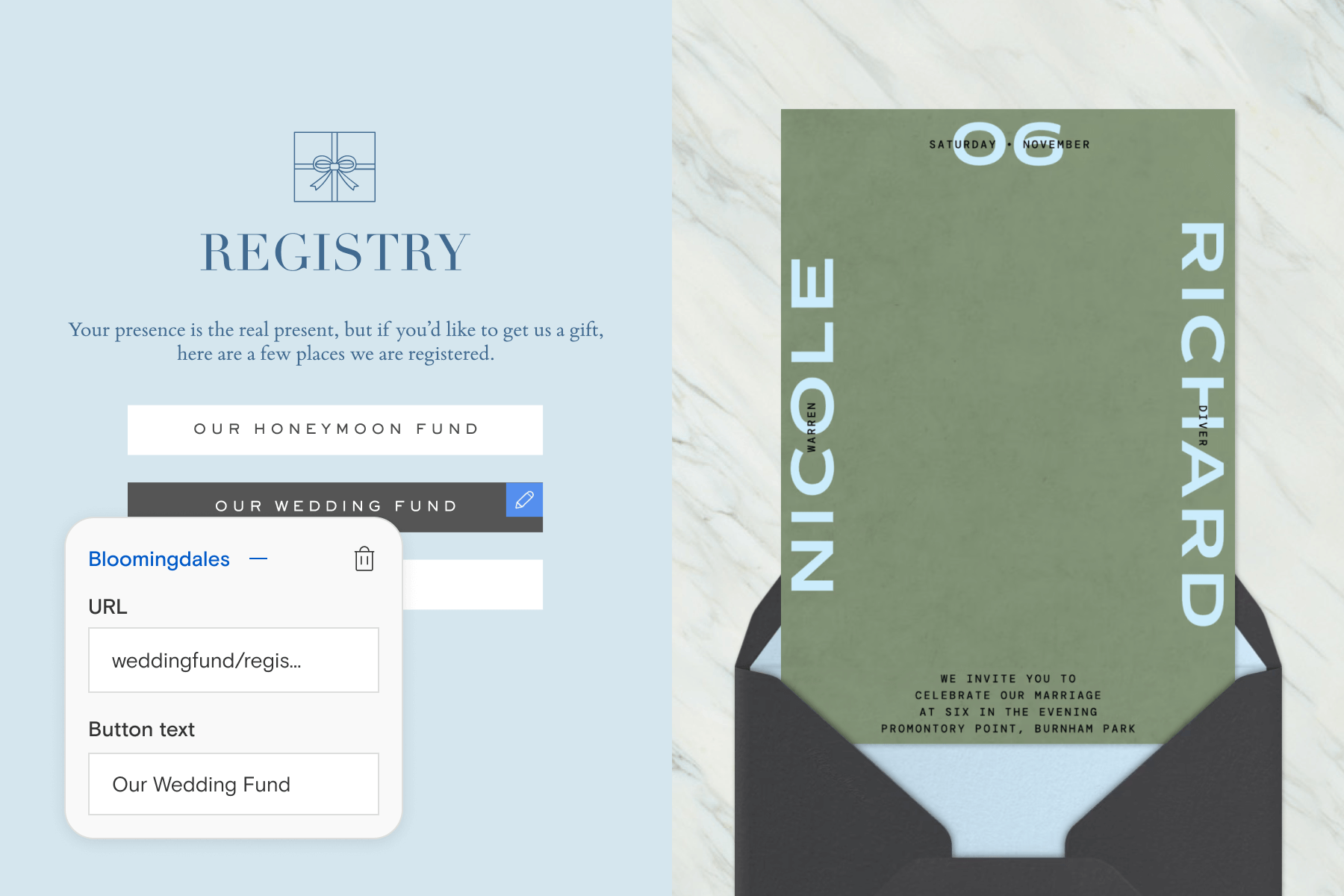
Some couples choose to offset wedding expenses by asking guests to contribute to a wedding fund in lieu of traditional gifts. This can be especially helpful for couples who already live together or don’t need household items. Guests can contribute cash toward wedding-related costs, the honeymoon, or future goals.
This approach can work both in person—such as providing a card box at the reception—and digitally through an online registry. When sending wedding invitations with Paperless Post, couples can easily include a Registry Block that links guests directly to their wedding fund or registry, making it simple to contribute in a way that feels easy and intentional.
FAQ
What about destination weddings?
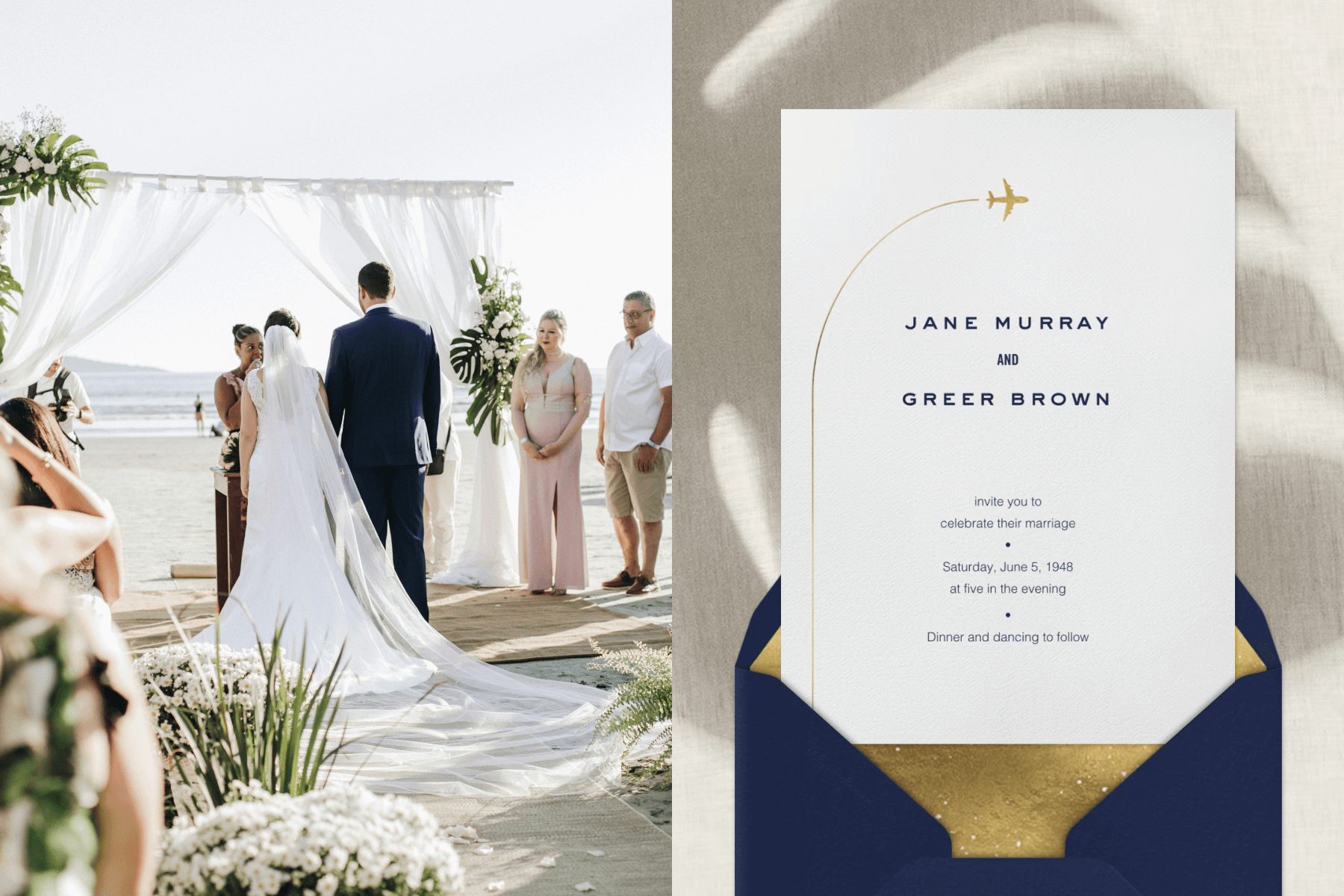
Destination weddings often come with different expectations around who pays for what. Traditionally, the couple covers most wedding expenses, while guests are responsible for their own travel and accommodations. However, some couples choose to subsidize certain costs—like welcome dinners or group transportation—especially if they’re asking guests to travel a significant distance.
Who is responsible for paying for the honeymoon?
In most modern weddings, the couple pays for their own honeymoon. That said, some families choose to gift the honeymoon as a wedding gift, or guests may contribute through a honeymoon fund instead of giving physical gifts. Many couples now include a cash or honeymoon fund on their registry to help offset these costs.
Who covers the cost of the wedding flowers?
Traditionally, the bride’s family pays for most of the wedding flowers, including ceremony décor, reception arrangements, and bouquets. The groom’s family may cover specific floral items, such as the bride’s bouquet, corsages, or boutonnieres. In modern weddings, floral costs are often split or folded into a shared overall budget, depending on how expenses are divided.
What about elopements?

For elopements, the couple almost always covers all wedding expenses themselves. Since elopements typically involve fewer guests and simpler logistics, costs are generally lower and easier to manage without outside contributions. Some families may still choose to help with specific elements, such as attire, photography, or a post-elopement celebration, but this is entirely optional.
Plan your wedding and wedding parties with Paperless Post

No matter how you divide wedding costs, clear communication and thoughtful planning make all the difference. And when it comes to save the dates, formal invitations, or invites to post-wedding brunches, Paperless Post is here to help you plan every moment with ease.
With customizable designs, built-in RSVP tracking, guest messaging, and easy registry sharing through features like the Gifts Block and Registry Block, Paperless Post simplifies wedding planning—so you can focus on celebrating, not stressing. Whether you’re honoring tradition, creating your own rules, or blending both, we’re here to help you bring your wedding vision to life.
Customizable designs from Oscar de la Renta, Rifle Paper Co., kate spade new york, and more.