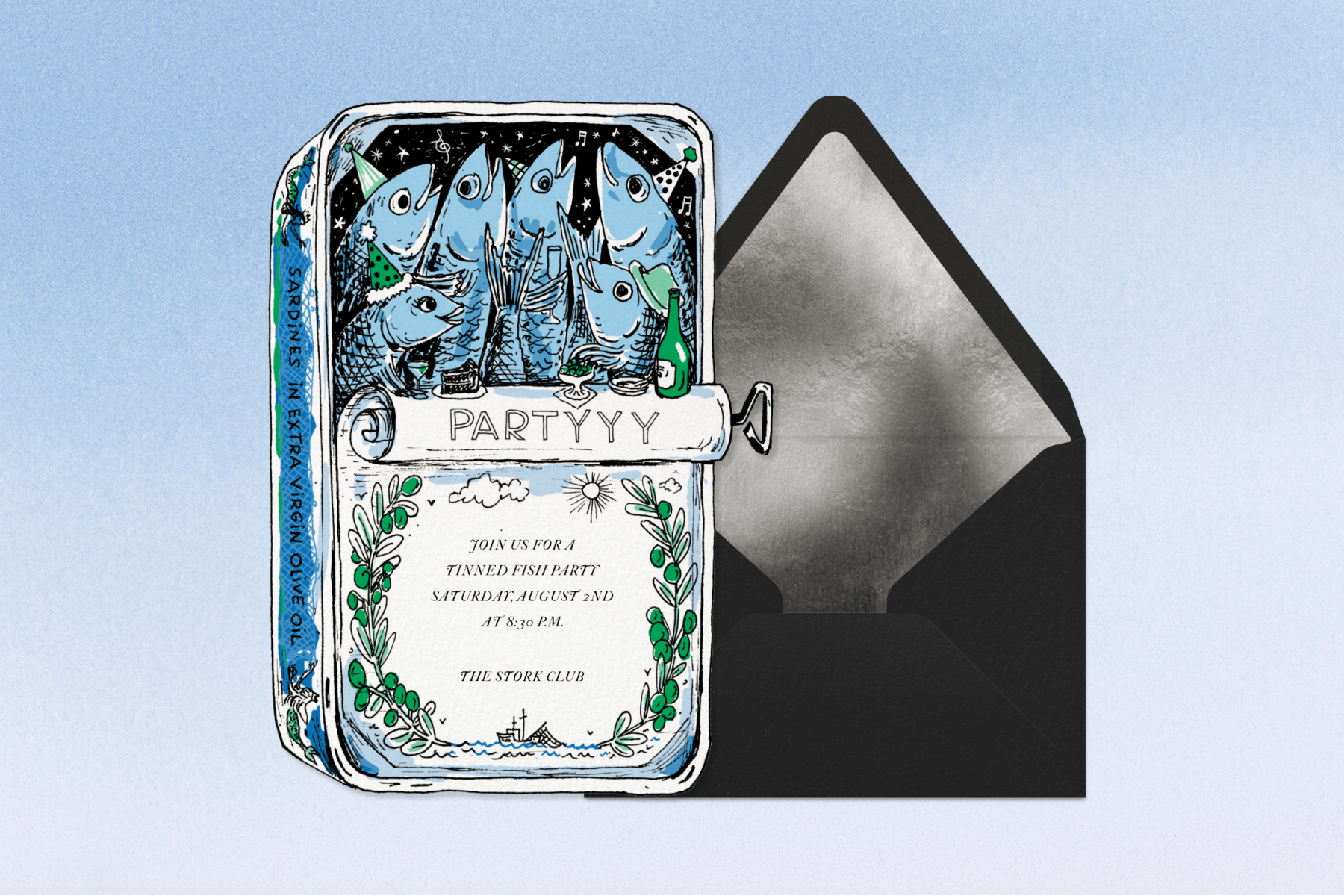
Tinned fish parties are trending: how to do it right
When you think of seafood, what ocean-dwelling delicacies come to mind? Delectable cod, crispy calamari, rich lobster—the common favorites of the underwater kingdom. In the last few months, however, the masses have repackaged and repopularized a specific seafood category, turning it into the tastiest trend for summer entertaining. Tinned fish parties are in—and let’s just say: they’re quite the catch.
What is a tinned fish party?
A tinned fish party is a seafood-themed gathering where the host offers a variety of tinned fish and guests bring their own fish favorites, sides, and more. The purpose? Sharing the delicious maritime wealth in a fun, creative, and community-oriented way! Tinned fish parties are trending this summer, and for good reason. Many seafood savants prepare to host by building charcuterie-style fish boards featuring an assortment of tinned fish, crackers, breads, pickled vegetables, and some crisp, refreshing beverages.
Why you should throw a tinned fish soirée
Pantry gems
Dinner party and cocktail hour costs often sneak up on us—all that fancy Comté and dry-cured prosciutto add up when you really crunch the numbers. Tinned fish isn’t just a tasty alternative to passed bites and charcuterie; it’s also easy on the wallet. Additionally, you don’t have to race around town the day of your event in search of fresh ingredients—tinned fish is a shelf-stable pantry gem.
Low-stress, crowd-pleasing
Since you can shop for all the tinned fish you desire in advance—usually up to three years or more—one party-planning task is already checked off your list. Even if you decide to go grocery shopping day-of, there’s no cooking involved—just pop the tins and other snacks open right before your guests arrive!
Step 1: Curate your conservas collection
Common fish to shop for, and then some
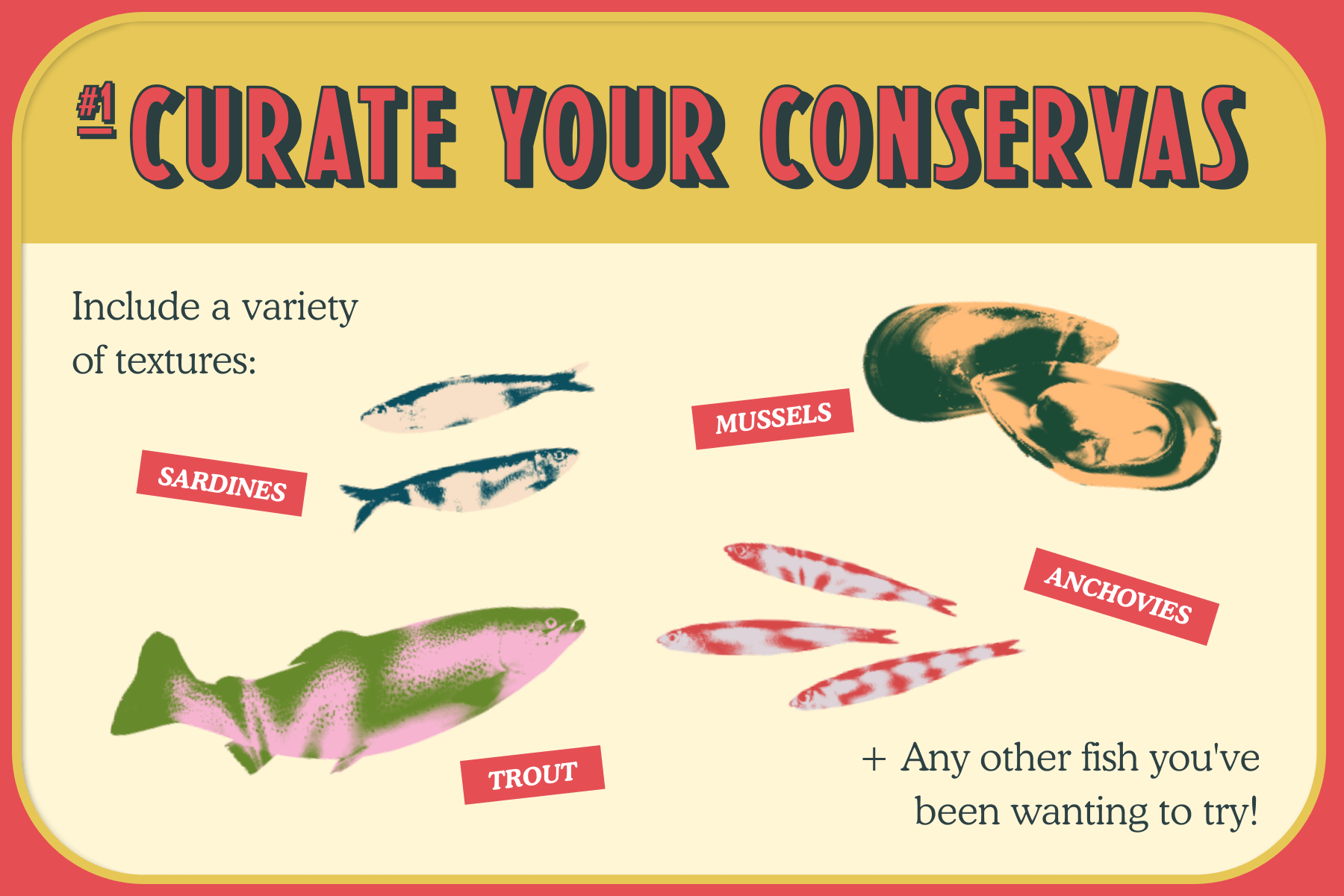
The first thing you’ll need for a tinned fish party is… yes, tinned fish! When shopping, you’ll want to explore different kinds of fish because they vary in taste, texture, and visual presentation.
The most common types of tinned fish you’ll find in your local grocery store are sardines, mackerel, and anchovies. Sardines are small and savory, but have a nice bite—look for cans that preserve them in olive oil or an acidic brine. Mackerel are a bit flakier and have a velvety-smooth texture, perfect for spreading across one of the crackers or crostini you’ll have on your fish board—more on that later! Don’t write off anchovies—they have an umami kick, perfect for creamy spreads and citrus.
If you’re looking to venture off the coast into deeper waters, consider browsing boutique grocers that carry a wider variety of tinned maritime fare. Think squid, octopus, and shellfish—fruits de mer pair exceptionally well with assorted breads, spreads, and crudités.
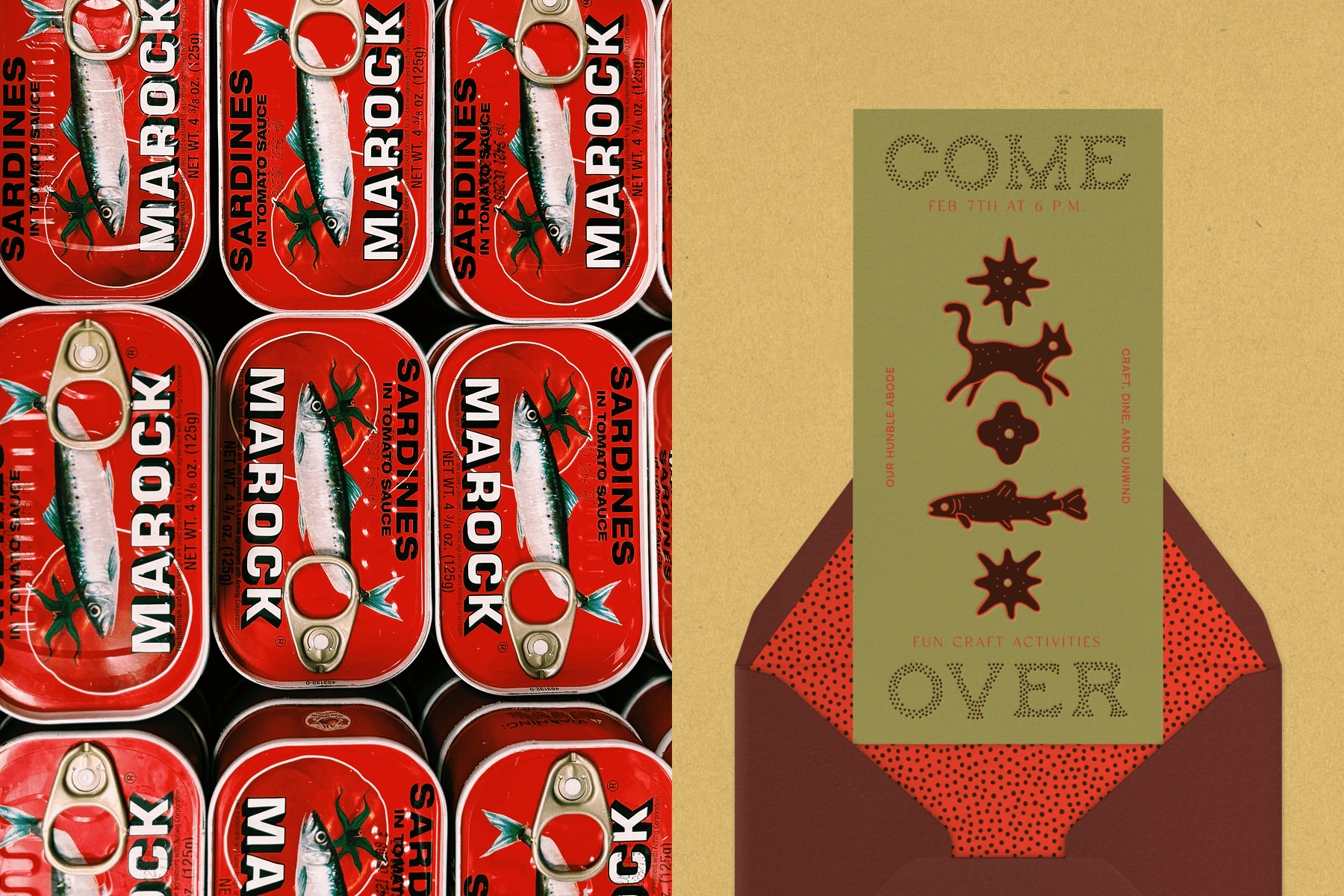
Tip: Ask guests what types of tinned fish they’re planning to bring with them so you’re not double-dipping. When you send invitations with Paperless Post, you can add a question for guests to respond to with their RSVP—there, you can make any necessary inquiries about which fish, breads, vegetables, and snacks guests intend to bring.
Step 2: Visualize your tinscape
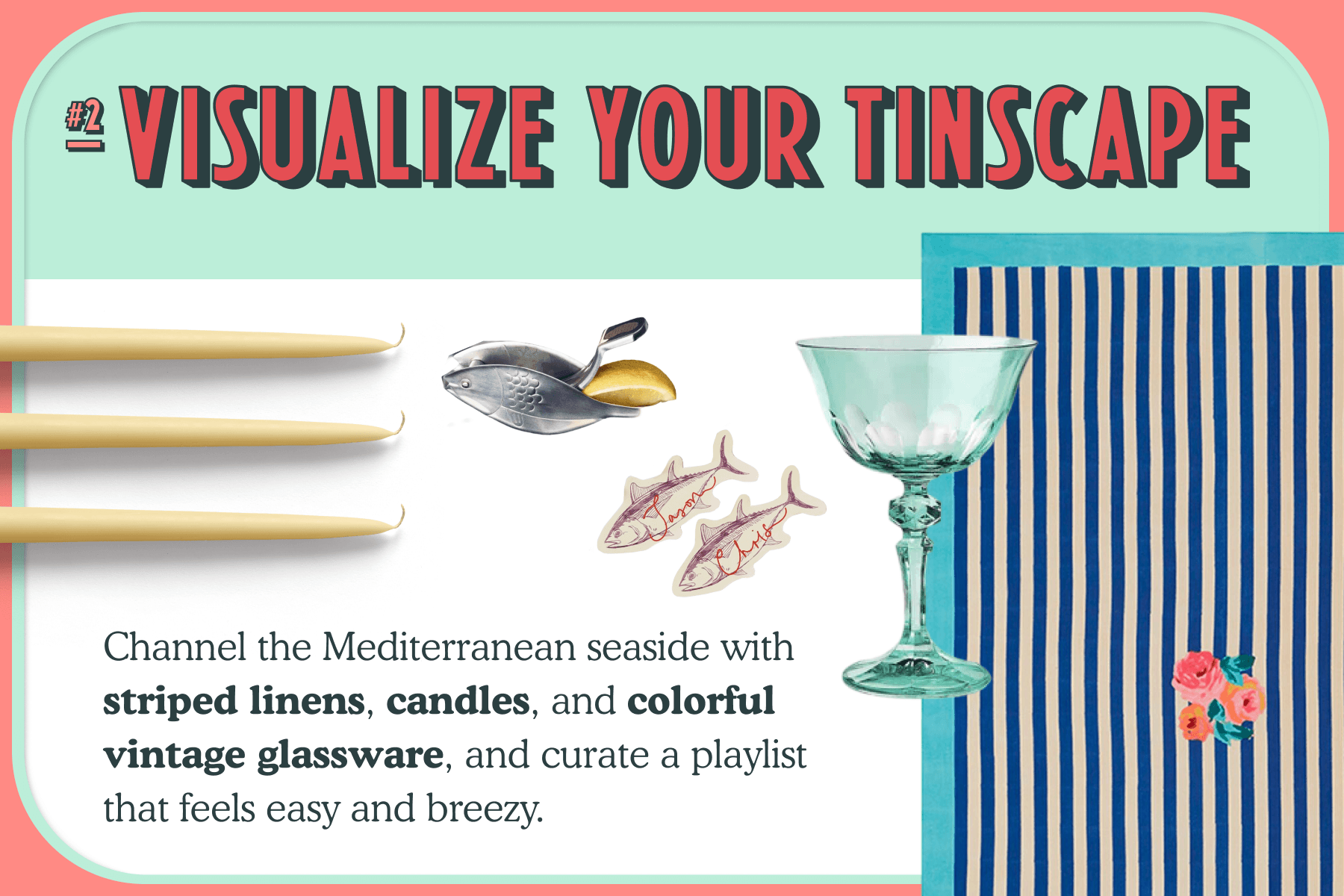
Play with packaging and plating
Similar to a charcuterie board, a tinned fish board (or tinscape) should be as visually appealing as it is delicious. Luckily, tinned fish brands on the scene have mastered the nautical, eclectic aesthetic. With beautiful packaging, there isn’t as much need to remove the fish from the tins—plus, they stay preserved in the briny gold.
If you’re looking to keep the fish board tin-free, put each type of fish in small pinch bowls and place them on different areas of the board.
Create texture with crackers, crusts, and chips
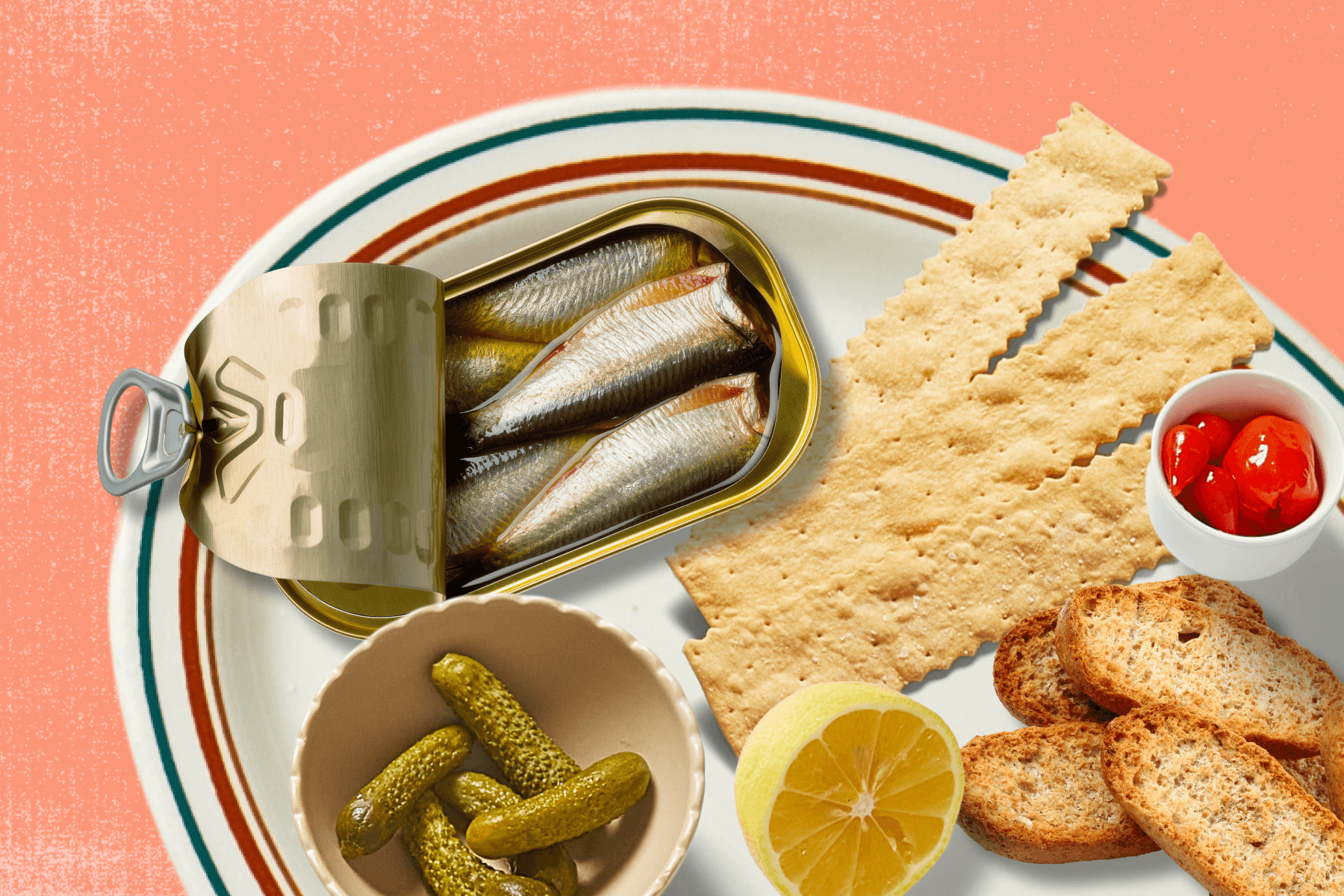
You’ve found the fish; now you need crispy breads and crackers to serve as their vessel. Since the fish are often preserved in oil and have a velvety, chewy texture, opt for complementary crispy starches.
Pick up some fresh sourdough from the bakery if you’re feeling fancy, or some crostinis from the grocery store if you want to plan ahead. Find some herbaceous crackers to add extra flavor to your board, and a generous amount of sea salt and vinegar chips for some extra acidity. A variety of textures—not only in different types of tinned fish, but also in assorted crackers and breads—creates a versatile fish board every guest will love.
Tablescape essentials
To avoid having a bunch of oily, salty fingers double-dipping in the fish tins, consider scouting mini forks so each guest can grab what they need and stay clean. Drip trays are a nice-to-have accessory to minimize the mess—but not necessary! Just make sure to have a good pile of napkins and handkerchiefs handy for guests when they’re taking a break from grazing.
Step 3: Find complementary flavors
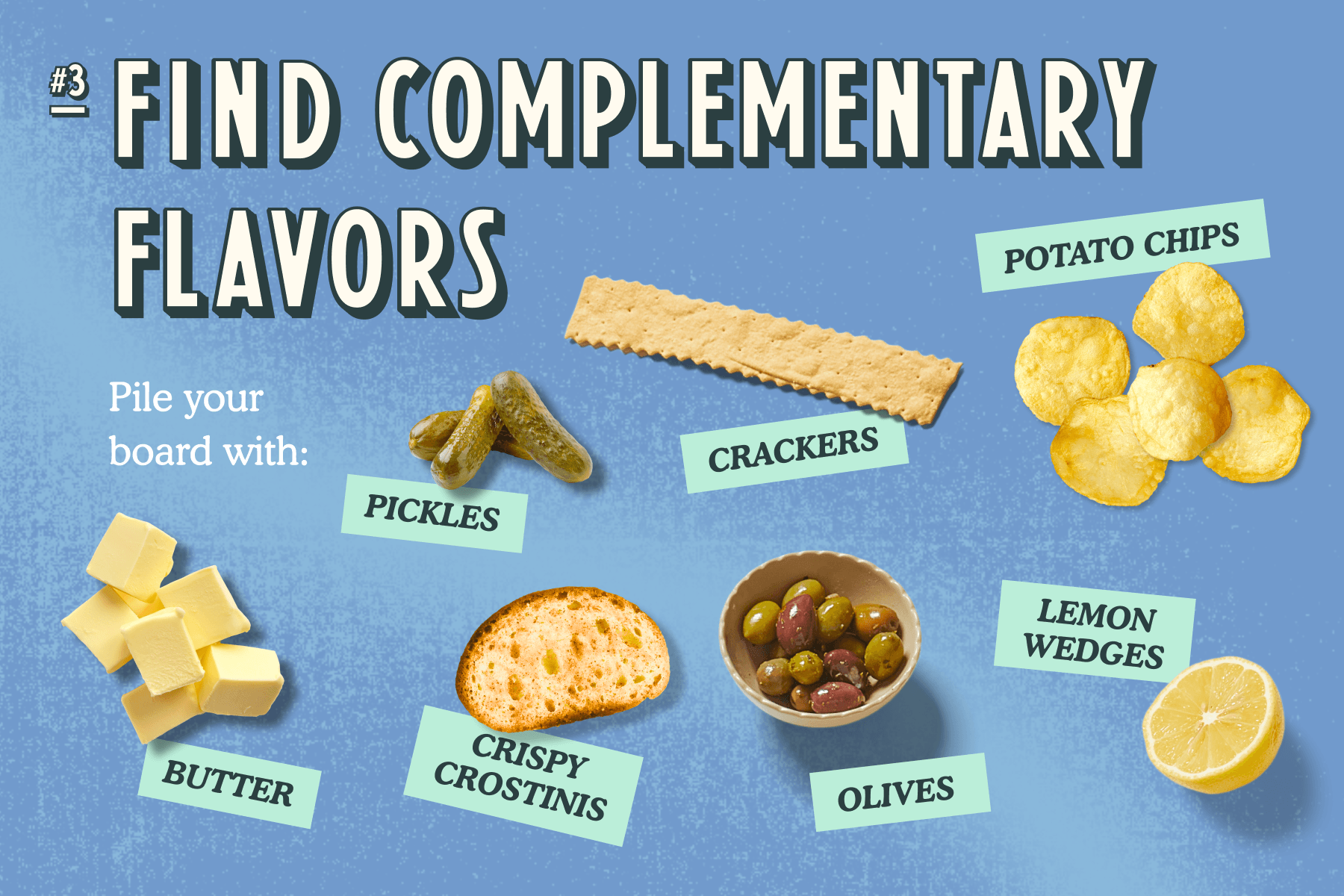
Pickled everything
Next, you need a surprise factor: pickled vegetables, and a lot of them. The trend here is the vinegary, acidic flavor. Fish boards are a savory food fest, and pickled veggies are the co-star of the show.
Grab a jar of tart, crunchy cornichons—they pair best with sardines and mackerel. The milder cousin of capers, caperberries, are also great for your fish board because they’re flavorful and juicy without distracting guests from the rest of the fare. Add some red onion for extra crunch and olives soaked in tasty brine. Flavor pairings are a delicate principle to understand when you’re building your tinscape, but once you have the right idea, it becomes second nature (and is very rewarding!)
Brighten up the palette
Between the oil and brine, you’ll want small but mighty additions to your board for some more flavor versatility. When everything is salty, add some lemon zest and fresh herbs so guests can concoct their own tasty combinations. Need some spice? Pour some chili oil in a dipping bowl for an extra kick!
Butters and spreads
To tie the saltwater creations together, add spreads that are rich in fat to your board. Think assorted flavors of savory cream cheese and cultured butters. The (quite literal) buttery-smooth texture of the spreads, juxtaposed with the bite of the starches and velvety feel of the fish, creates the perfect balance between flavor and texture.
Step 4: Discover sea-cuterie drink pairings
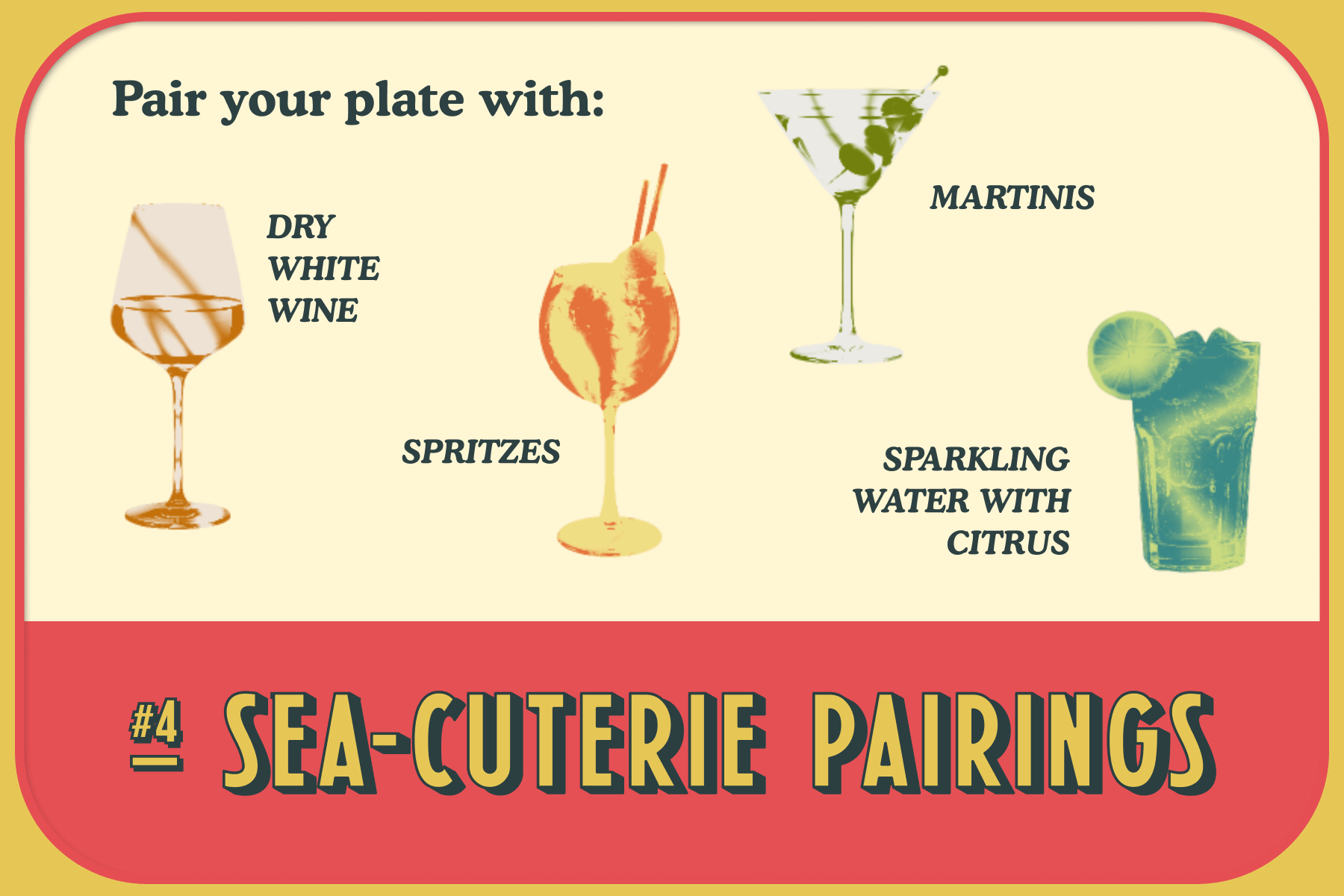
Crisp whites and bubbly
Tinned fish pairs very well with dry or slightly sweet white wines. A bottle of Vinho Verde hits the spot, but generally, any dry white will do the trick. Pick up a bottle of Pinot Grigio if you’re looking for something light, Sauvignon Blanc if you like vibrant, acidic flavors, and Chardonnay if you want a rich, complex pairing. You can also never go wrong with some effervescent bubbly—it serves as a slight palate cleanser, perfect for trying out different flavor combinations.
Dry and briny ’tinis
If you’ve got a real knack for the savory things in life, purchase some vodka or gin, an extra jar of olives (for garnish and brine), and a bottle of dry vermouth. Chill your martini glasses and prepare the cocktails as needed. Don’t be afraid to keep your ingredients in the fridge—the colder the martini, the better!
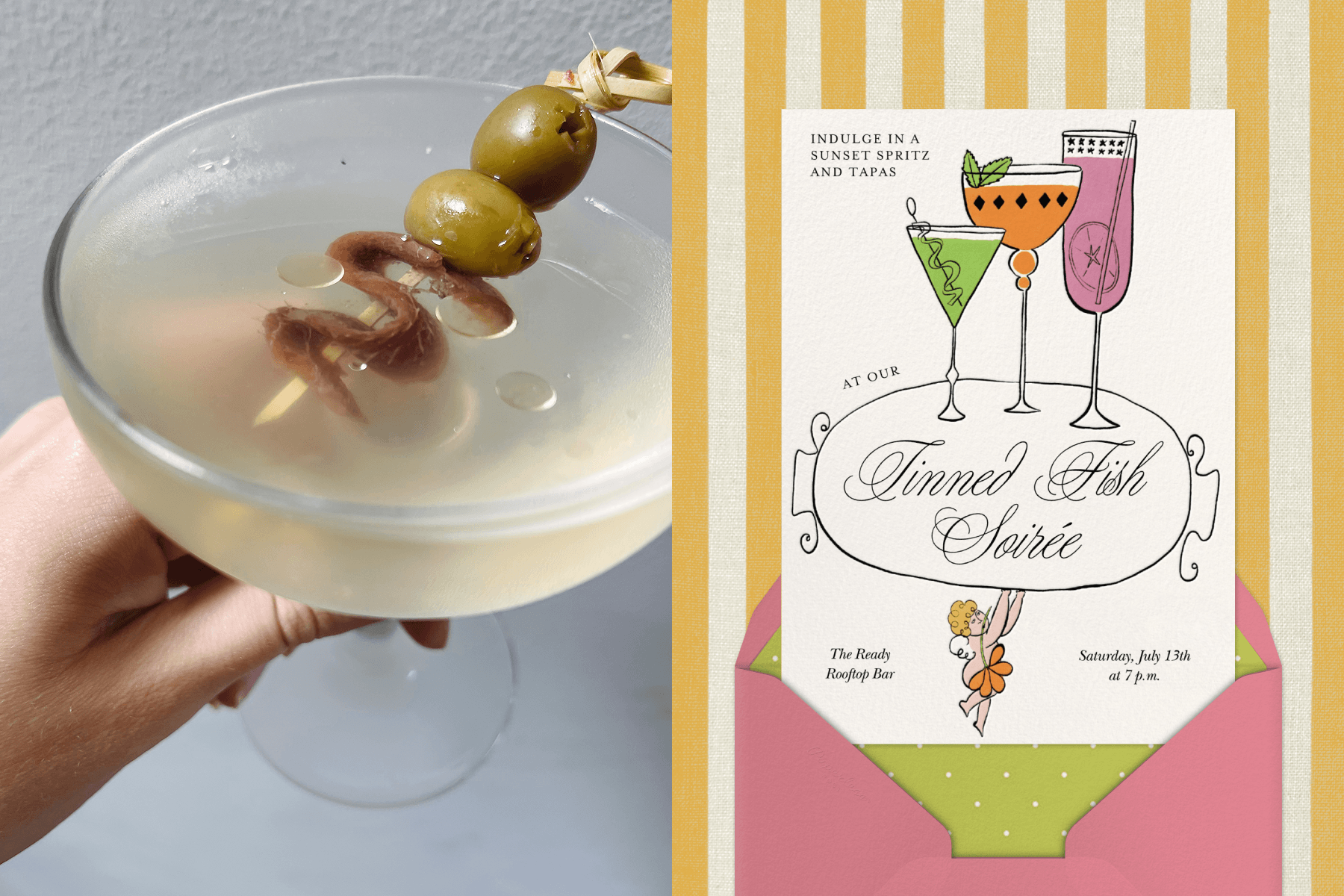
Zero-proof pairings
Don’t forget about the guests who prefer mocktails! Add sparkling water, elderflower soda, tonic water, and ginger beer to your shopping list—these will lay the foundation for most mocktail creations. Next, pick up mint, cucumber, assorted citrus, and simple syrup. With these ingredients, you can make cucumber mint spritzes, orange mock-mules, and elderflower tonics—perfectly refreshing for summer soirées filled with seafood and other salty delights.
Tinned fish party FAQ
Will the smell be distracting?
Though most tinned fish certainly have a smell, it’s nothing a candle or scent plug-in can’t fix. If the weather calls for it, leave your windows open to keep the fresh air circulating. Lean into the scents of the summer: florals, citrus, and linen. If you’re feeling adventurous, make your own safe-to-eat butter candle—and add fresh herbs like rosemary and thyme for a delicious scent and taste.
How should I dispose of the tinned fish?
Use an absorbent paper towel to soak up any leftover oil or brine from the tin, and put the waste in a plastic bag—the tins should be rinsed and recycled. You can also preserve the oil in your refrigerator for up to four days and use it for cooking! If you have leftover fish, it also remains good in the refrigerator for up to four days.
What should I prep the day prior?
Because tinned fish parties praise the impromptu host, you don’t need to do much to prepare. Keep a checklist of fish, breads/starches, and extra complementary snacks for your board. Don’t forget to ask your guests what they’re bringing—you can add a question to any Paperless Post invitation to ensure all the answers are in one place.
When should I crack open the tins?
Ideally, you’ll open your cans of tinned fish no more than one hour before, but if you’re keeping all fish in their original tin packaging, you can open them right before guests walk through the door.
Host a tinned fish party with Paperless Post
Tinned fish parties are an effortlessly cool way to host a no-frills dinner get-together without breaking the bank. There’s still nearly two months of warm, radiant weather ahead—take advantage of it with a tinned-fish summer soirée and start planning now with Paperless Post.