Inside the busy world of Richard Scarry for Paperless Post
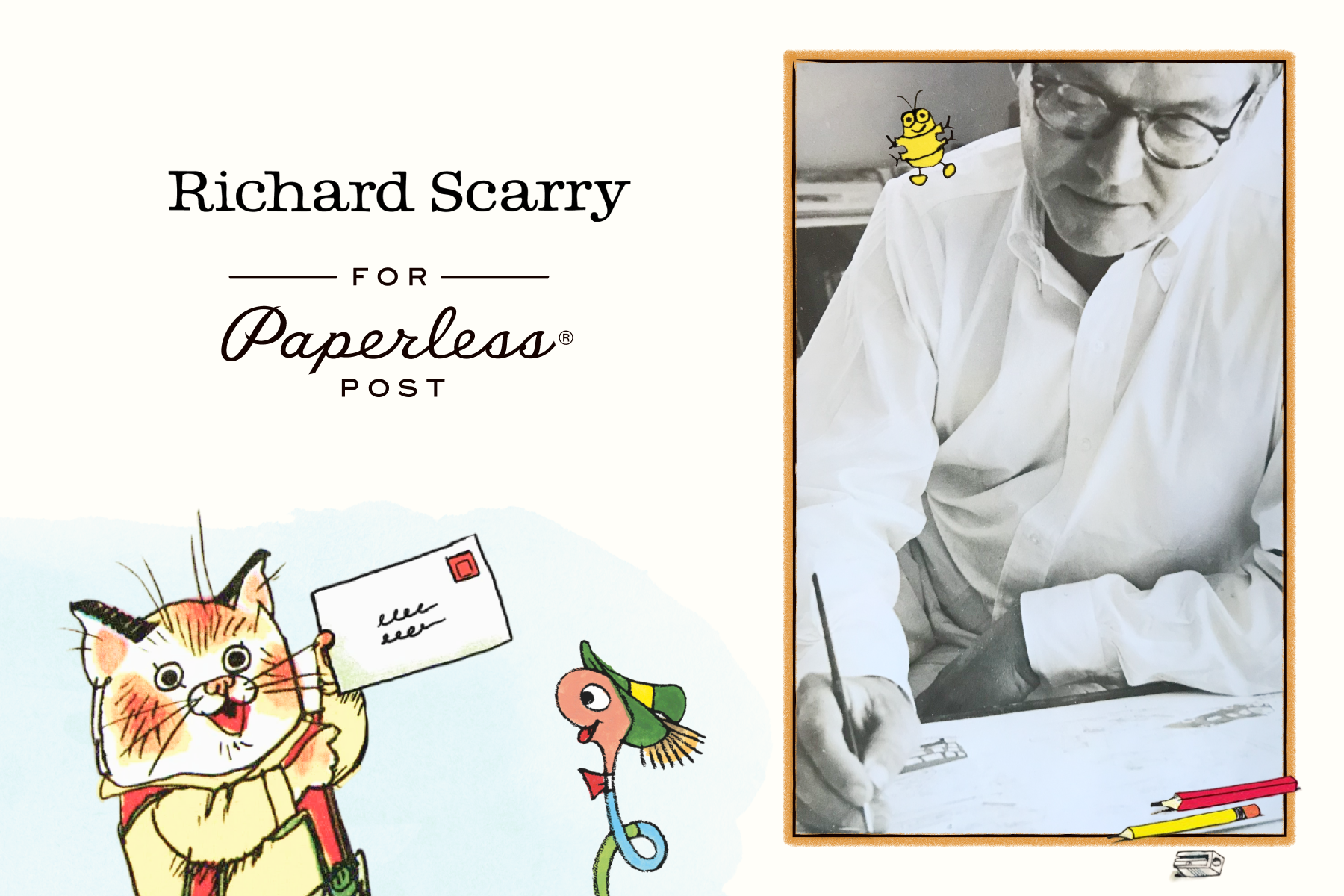
The books of beloved author and illustrator Richard Scarry have been bringing joy and laughter to children and adults alike for generations. Throughout his career, Richard Scarry illustrated over 150 books, including all-time classics like “Busy, Busy World,” “Cars and Trucks and Things That Go,” “Best Word Book Ever,” and many more that remain staples on any bookshelf.
From educational books that teach children how to count to hilarious scenes depicting happy accidents in a bustling town full of animal characters, Richard Scarry brought his signature sense of humor to everything he touched. Richard once said, “Everyone has to learn to read, to write, to know the alphabet, to count, to learn good manners, and many other things. In trying to teach these things, I like to use animals dressed as humans; it is more fun!”
Now, we’re thrilled to bring that fun—along with the iconic characters, colorful illustrations, and chaotic scenes of Richard Scarry—into our new collection of invitations for Paperless Post. We’ve collaborated with the Richard Scarry team to create designs that evoke the nostalgia, joy, and wit of Richard’s cherished children’s books, with a fun wink to current references and irreverent humor for parties that will delight hosts and guests of all ages.
We were also fortunate enough to speak with Richard Scarry’s son (and acclaimed children’s author himself) Huck Scarry, on everything from growing up with the celebrated author to the influences behind the unique work that inspired our Paperless Post designs. “When guests receive an invitation from this collection, I hope they will smile…maybe even laugh, and be tickled by my father’s warmth and humor,” says Huck—a hope that we at Paperless Post share as well!
On the inspiration behind Richard Scarry’s work

“When asked where he drew his inspiration from while creating his books and illustrations, my father would always reply with: ‘Outside, in the street!’,” says Huck. Observing the busy and oftentimes silly world around him informed both the scenes and humor of Richard Scarry’s work. “I always say that my father made very funny books because he was a very funny man,” continues Huck. “And because he was funny, he saw funny things happening around him wherever he went, which would often find their way into his books.”
According to Huck, Richard was also inspired by an informational German picture dictionary called “The Duden” as well as the famous landscape paintings of Pieter Bruegel, which would often depict crowded streets and even children playing. Combining these concepts to inform and inspire his signature perspective and illustration technique with corresponding captions, Richard created his now instantly recognizable style.
On the Scarry family’s worldly travels
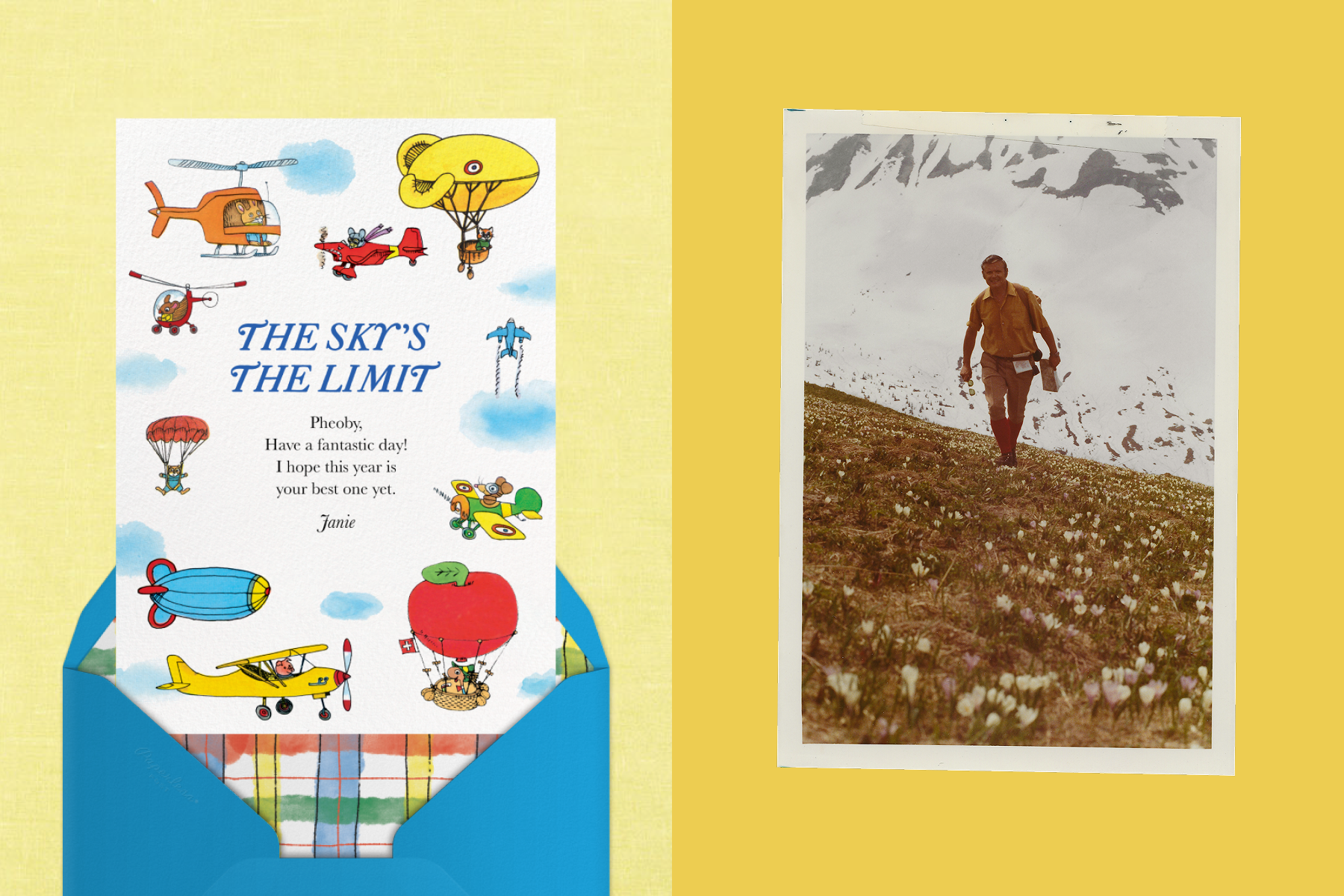
“My parents were always traveling,” Huck recalls, which also served as inspiration for many of Richard’s books and illustrations. “My father loved the Alps. My parents made a big trip through Europe in 1950, and stayed a long time in Tyrol. There, he bought the hat that would one day, decades later, become Lowly Worm’s.” On that trip, Richard and his wife, Patsy, also spent time in the French Riviera, Italy, and Paris. They traveled to Europe as a family multiple times in the years to come, and “Busy, Busy World” actually drew inspiration from the family’s 1963 summer Europe trip.
In 1968, Richard and his family decided to move to Switzerland—eventually buying a small chalet in Gstaad, followed by frequent travels to Morocco and Kenya. These adventures would lend unique inspiration to all the exciting, yet always relatable, goings-on in the settings of Richard’s many books.
“Very basically, Richard created a friendly town. Busytown is a place where you would like to be, where everybody tries to do their best. They’re happy at the work they do, and always try to get things right, even if there are always accidents that happen, which makes Busytown fun and unpredictable,” Huck explains. “And Busytown is everywhere,” he continues. “Where you live, in the city, in New York, or wherever. But basically, when you see the people in Busytown going about their work, having problems, and having adventures, these are neighborhoods that anybody could and should have around them.”
On the real-life versions of his iconic characters

Beyond the iconic Tyrolean hat worn by Lowly Worm, Huck also informed us of other real-life sources of inspiration for some of Richard’s most well-known characters. Significantly, Huckle Cat was inspired by—you guessed it, Huck himself!
“My real name is Richard, like my father. And when my father held me for the first time in the hospital room, he said, ‘This is a little Huckleberry Finn.’ And it stuck,” states Huck. “And so I was never called Richard at home. I was always called Huck. As a term of endearment, instead of Huckleberry, my mother would call me Huckle Bear. And there was a Huckle Bear character before Huckle Cat.”
Huckle Bear, like Huckle Cat, also wore lederhosen inspired by Richard’s love of Austria and Switzerland.
“I started off as a little bear in my father’s books, as Huckle Bear. And I can’t tell you why he became a cat later on,” says Huck.
Another character based on real-life happenings? Mr Frumble.
“In our house, everything was breaking all the time,” Huck recalls. “My father created this character called Mr. Frumble. He’s very much based on my father. My father was constantly accidentally breaking things. But he could always laugh about it and say, ‘Oh well, that’s gone. Well, we have to get another one.’ He saw the funniness of accidents.”
On historical context impacting Richard’s books
Not only did Richard find artistic inspiration in personal observations from his own life, but he was also influenced by the current events unfolding around him, including the Women’s Liberation movement of the late 1960s and early 1970s.
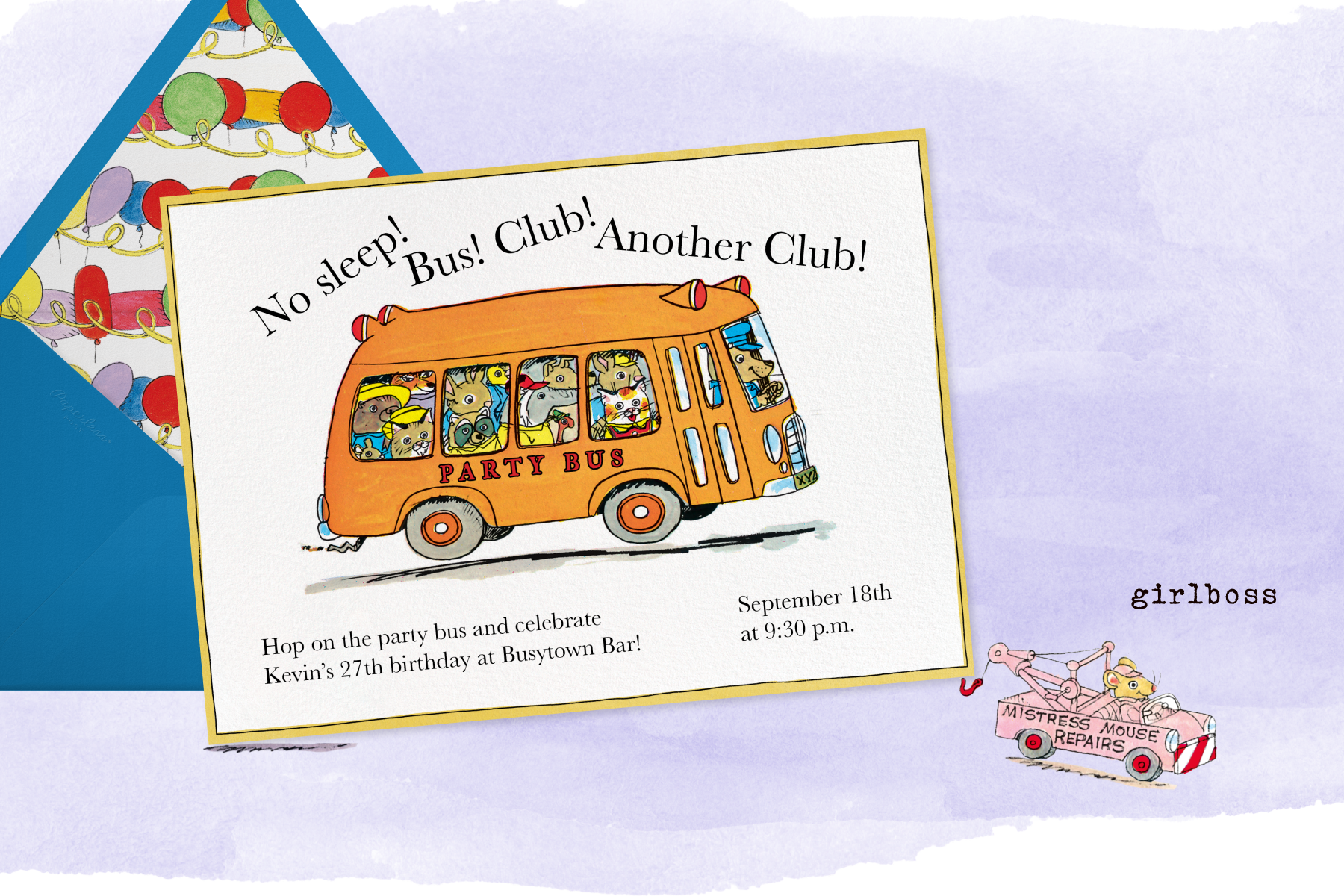
“My father made a definite nod towards the Women’s Liberation Movement, which he took seriously,” explains Huck. “For instance, in “Cars and Trucks and Things That Go,” Officer Flossie—who is a police lady on a bike—is chasing a terrible dingo dog, who’s a terrible driver. And he put in little Mistress Mouse, a tiny little mouse in a pink tow truck. She’s a mechanic, and she’s teeny weeny, but there’s no truck too big or heavy that she can’t pull with the hook of her little tow truck. He certainly felt that every sex and every type of person should be treated equally and respectfully.”
On Richard’s childlike spirit
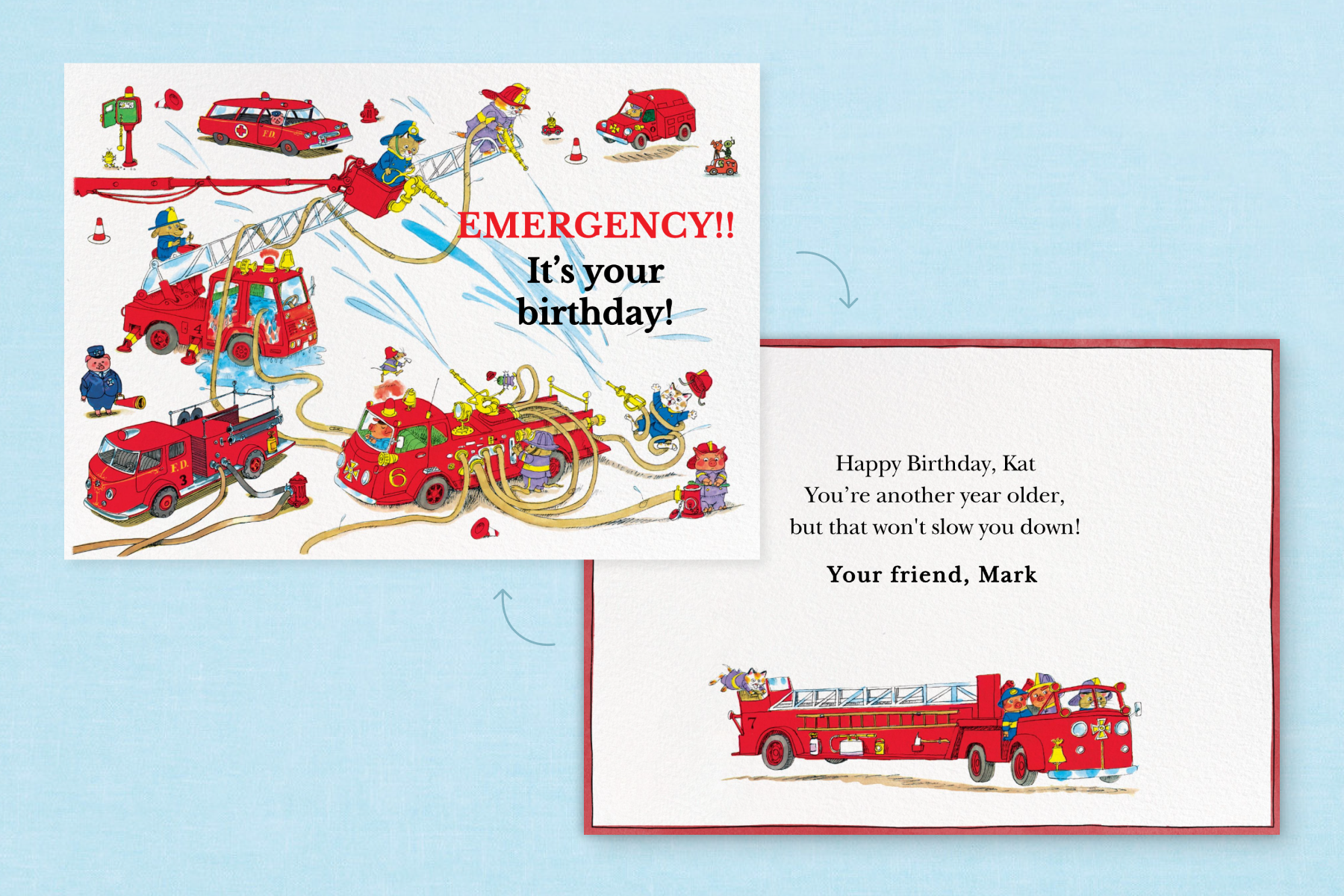
Huck explains how Richard would bring a playful spirit, natural curiosity, and a sense of youthful wonder to all his work. “My father never lost the child within him. He saw the world very much with the eyes of a child: curious, questioning, happy. He knew that there’s a magic in retaining innocence and curiosity about things, of getting excited about the simplest things—whether it’s a steam locomotive or a fire engine, or the beauty of a tree or a flower, or even a worm.”
“Sometimes people would say, Richard, how old are you anyway? And my father would put up one hand and spread his fingers. He was five years old.”
On Richard’s artistic process

We were also curious about Richard’s artistic process when creating his beloved books, originally designed with pencil, ink, gouache, scissors, tape, and glue. “He was a visual author,” Huck describes, “always sketches on tracing paper, adding texts taped in place with scotch tape.”
“He would draw the entire book on tracing paper, actually a plastic acetate sheet, which he could erase more easily if he made a mistake, a little bit more sturdy than tracing paper,” he elaborates. “And he made his entire book just in black and white. And when those black and white spreads were finished, they would then be printed in a pale blue ink on illustration paper, like watercolor paper, a technique known as blueboarding.”
Richard would then color in his illustrations one color at a time. Huck, who eventually went on to assist Richard with his coloring and illustrations later in life, recalls that they would always start with one particular hue. “He insisted that we would always start with red. And once I said to my father, ‘Dad, why do we always start with red?’ And he turned to me with all seriousness and said, ‘I like red.’ So I couldn’t argue with that.”
On translating Richard’s work into Paperless Post designs
Our Paperless Post design team worked hard to bring Richard Scarry’s one-of-a-kind voice and style into our collection. Senior Art Director Mariya Pilipenko describes how she embraced the expansive source material. “I felt truly inspired diving into the vast archive of Richard Scarry’s work,” Mariya says. “It was such a joy to flip through his books and uncover moments that felt celebratory, silly, and full of personality. I especially loved highlighting tiny details, like working to sneak in Goldbug as a little Easter egg whenever possible.”
Senior Graphic Designer Jin Xia also elaborates, “Our goal was to preserve the integrity of Richard Scarry’s world and let his illustrations truly be the star of each design. My favorite part of the process was digging through the incredibly vast Richard Scarry archive to find the perfect moment for each card. It felt like assembling little story fragments—piecing together scenes that would shine in a Paperless Post invitation.”
Explore the fun and busy world of Richard Scarry
“Piggy Bash” by Richard Scarry for Paperless Post
With our new invitation collection, hosts and guests of all ages can embrace the nostalgia, humor, and optimism of Richard Scarry. On the advice he would give to party hosts, Huck proclaims, “Buy too many drinks and a bit too much to eat. Keep glasses filled! Fill your room with guests!” Basically, the busier the better.
For kids’ birthday parties, rowdy apartment get-togethers, bubbly baby showers, and more, find invitations to bring people together for any reason, and browse the full collection of invitations from Richard Scarry for Paperless Post now.